Duty
State the animal, garden or boundary purpose.
Defines aperture and support questions.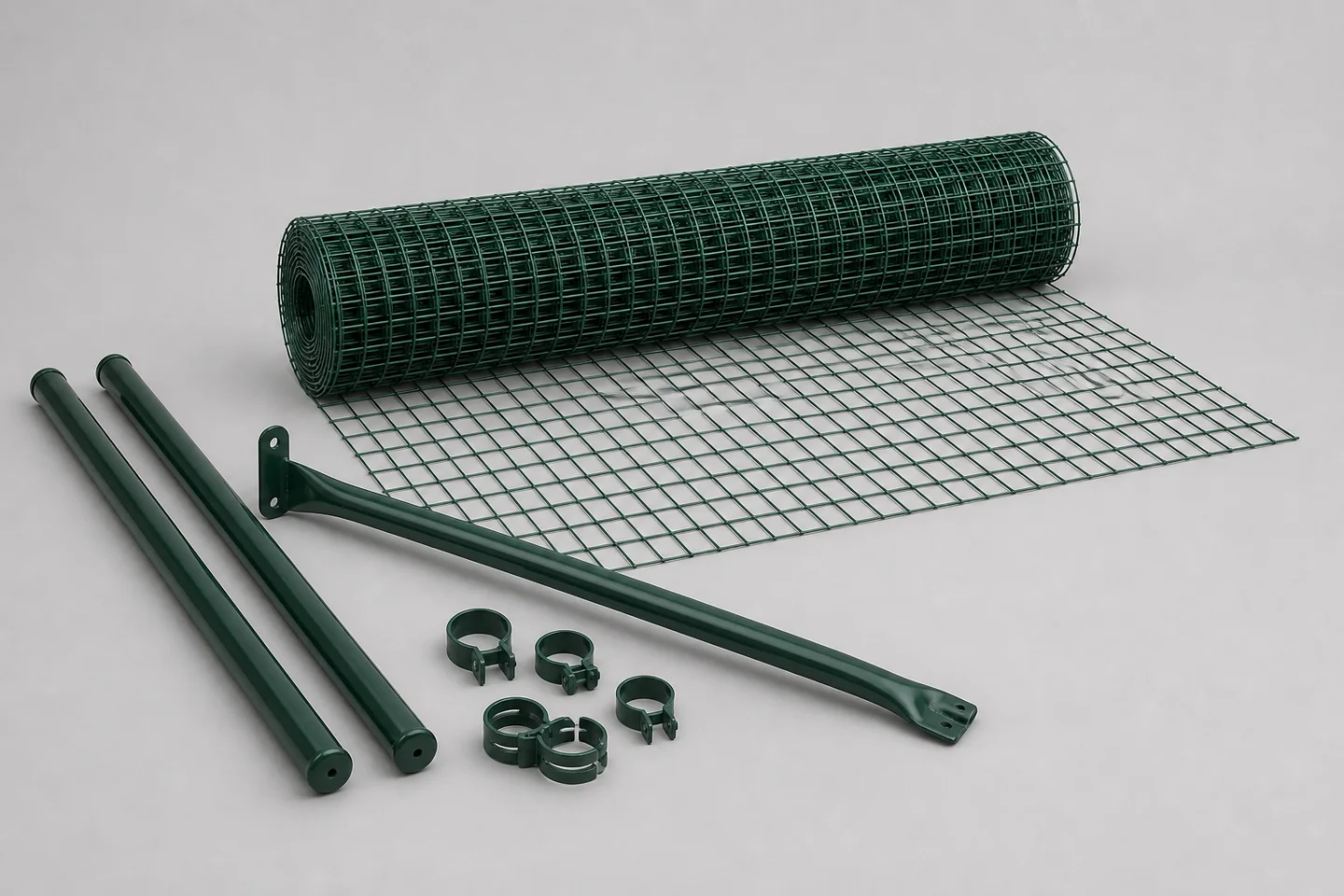
Orchard and pasture roll-mesh system
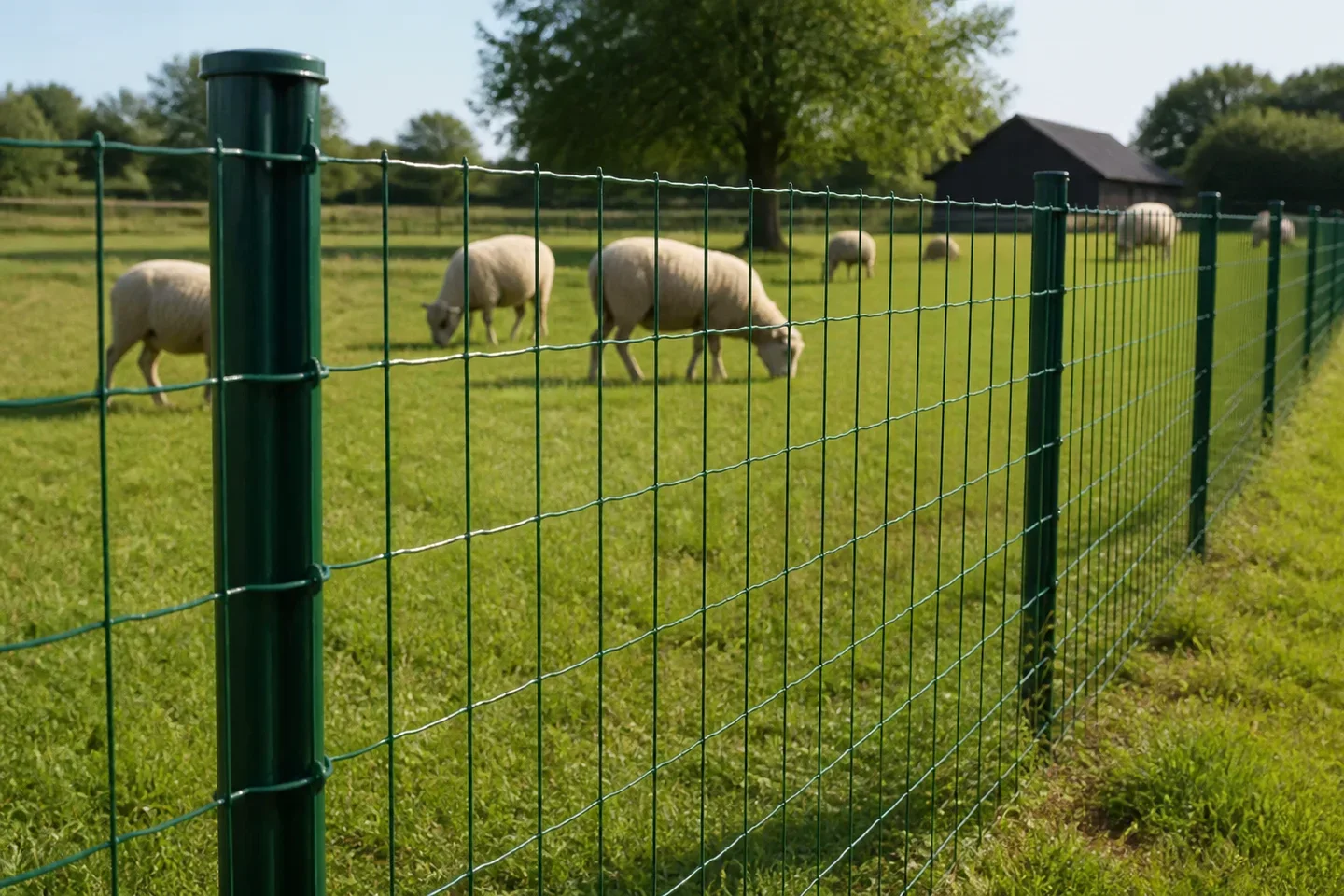
A green coated welded roll-mesh family for orchard edges and adjacent livestock areas, coordinated around aperture, height, posts, braced corners, tree and equipment clearance, gates and terrain.
Provide the animal and crop context, orchard plan, fence height, mesh opening, corners, gates, machinery routes, ground levels, supports and exposure before quotation.
The page collects the variables that change suitability, scope and price. It does not replace the approved drawing, quotation or responsible engineering review.
State the animal, garden or boundary purpose.
Defines aperture and support questions.Confirm opening, wire and welded construction.
Sets the material basis.Provide required width, length and quantity.
Controls supply and packing.Send runs, corners, levels and openings.
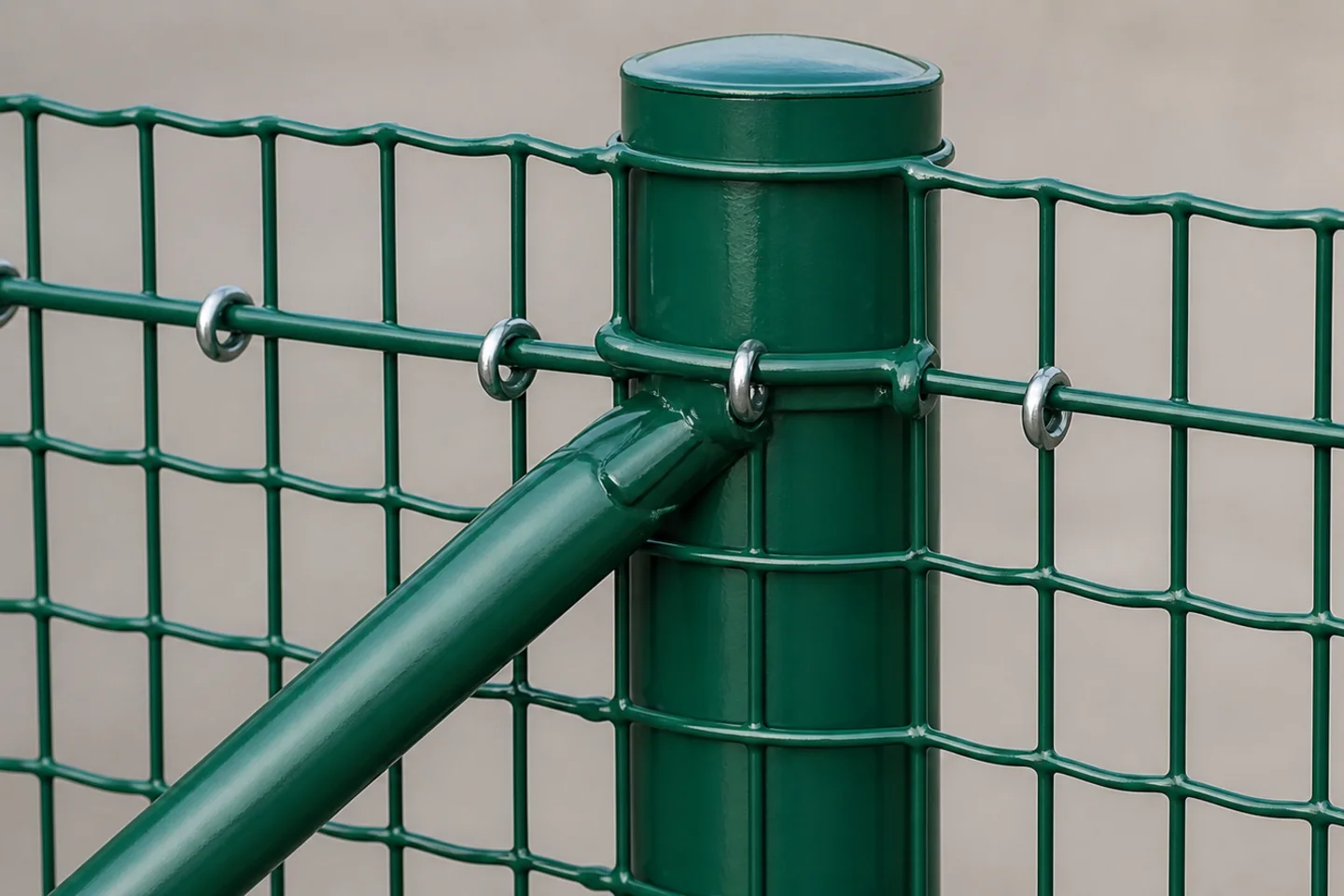
Controls tension sections and accessories.State posts, spacing, braces and fixing method.
Prevents unsupported use.Map machinery, irrigation, harvest and maintenance routes.
Prevents access conflicts.Values shown here describe the supply variables. Exact dimensions, finishes and components are confirmed for the project.
Send the missing inputs →| Field | Current supply basis | What to confirm |
|---|---|---|
| Mesh | Welded rectangular wire grid | Confirm aperture in both directions. |
| Wire | Project-selected steel wire | Confirm diameter and tolerance. |
| Supply | Flexible rolls by order | Confirm width, length and packing. |
| Supports | Posts, braces and clips by scope | Provide layout and responsibility. |
| Finish | Project-selected coating | State exposure and colour. |
| Clearance | Tree, equipment and ground offsets by layout | Provide the orchard plan. |
| Final basis | Approved specification and quotation | Images do not prove containment or life. |
The sequence keeps product selection, engineering responsibility and commercial scope aligned.
State the boundary, access or separation purpose and every applicable project criterion.
Provide dimensions, corners, levels, openings, supports and site interfaces.
Approve material, finish, connections, accessories and responsibility boundaries.
Confirm drawings, quantities, packing, destination, documentation and delivery timing.
Each image explains a form, interface or possible application. Captions state where a drawing, sample or project review is still required.

These answers define the quotation boundary without inventing project-specific performance.
Provide the animal, pest or boundary duty and the maximum acceptable opening; samples may be appropriate.
They can be quoted after the layout, spacing, corners, braces, openings and installation scope are defined.
Gradual levels can be reviewed from the alignment, support spacing and required bottom clearance.
Provide machinery width, turning path, livestock movement and maintenance access for review.
Complete the known fields. If drawings or standards apply, mention them in project notes and attach them when your email application opens.
Submitting this local form opens your email application. It does not transmit data to the website.