Project-configured fencing · factory-direct supply
Wire mesh and fence systems, configured for the job.
Move from application and layout to a coordinated panel or mesh, posts, gates, finish, accessories and export packing scope.
- Start with
- Duty and environment
- Configure
- System and interfaces
- Approve by
- Drawing and quotation

Start from the information you already have.
Use one route for product families, one for operating context, or one for known dimensions. Each route leads to a different decision—not the same category list with a new label.
Choose by product system.
Browse the 44 published product pages across welded mesh, security, industrial, temporary and architectural systems.
Choose by environment and duty.
Start with perimeter, industrial, construction, transport, sports or landscape use.
Work from dimensions and requirements.
Use calculators, selection tools and RFQ preparation support.
Four systems buyers most often need to separate first.
These routes distinguish permanent perimeter panels, controlled industrial zones, temporary boundaries and high-security mesh. The complete center remains the source for all published product families.

Welded Mesh Fencing
Compare panel geometry, mesh, posts, gates, connections and finish as one system.
Explore welded mesh fencing →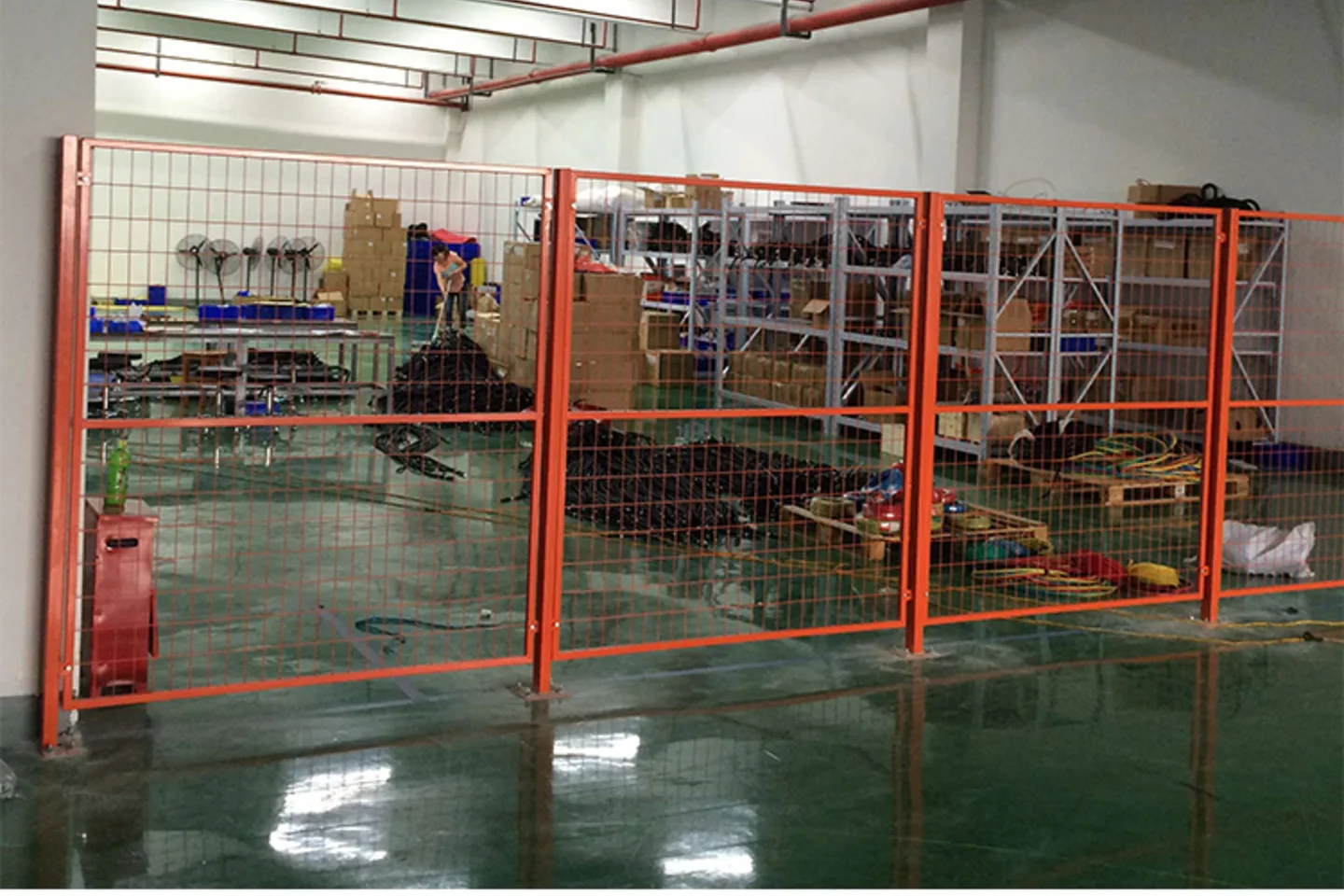
Industrial Partitions
Machine, warehouse and equipment-area separation with coordinated access.
Explore partitions →
Temporary Fencing
Review panels, feet, clamps, braces, gates and packing for repeated handling.
Explore temporary systems →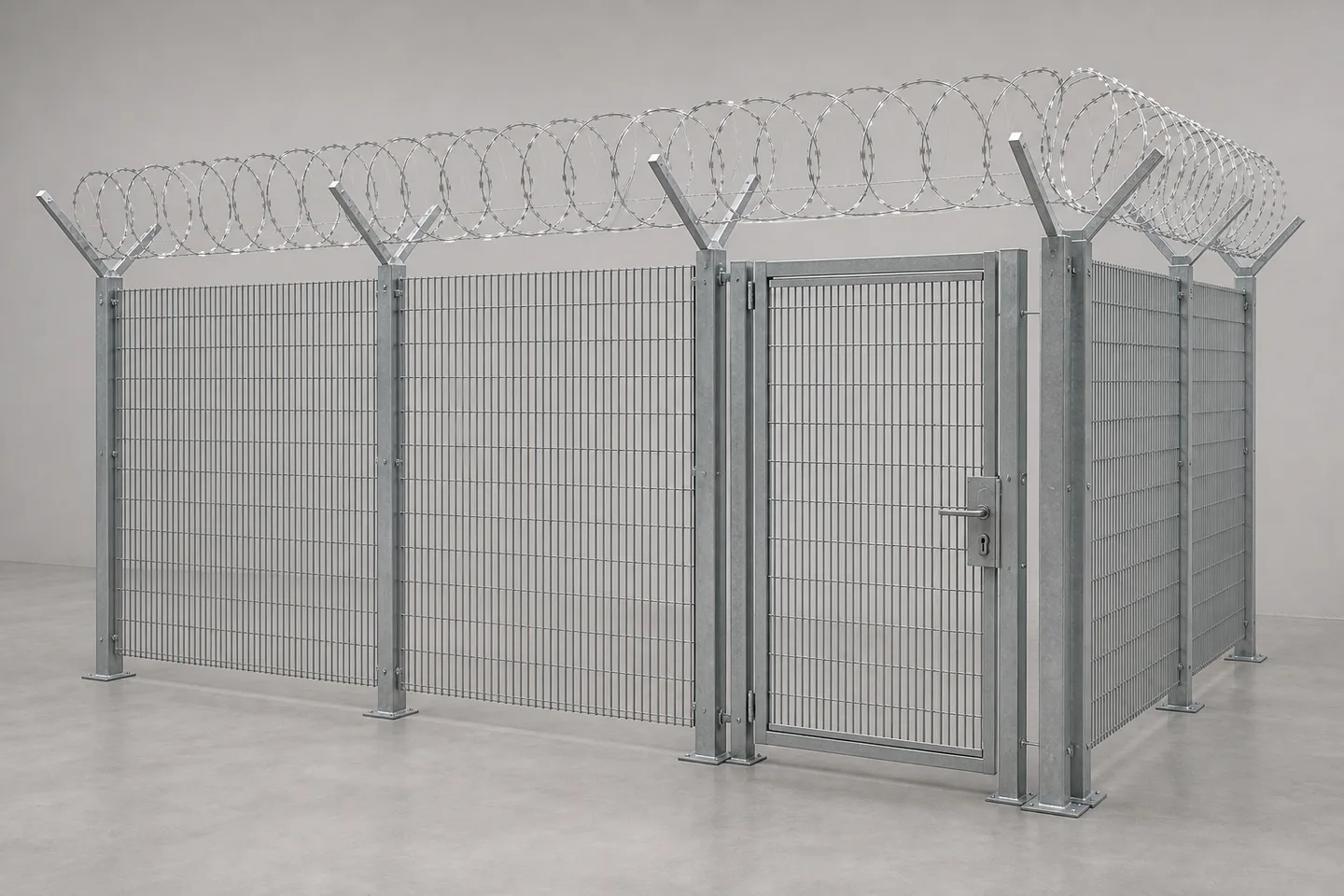
High-Security Fencing
Coordinate mesh, height, posts, topping, gates and the required security duty.
Explore security fencing →Review the supplier evidence separately from product illustrations.
Use manufacturing, quality and workshop material to assess supply capability. Product-family and application images explain selection; they do not prove a delivered project, test result or certification.
Video context supports supplier review; the approved order documents remain the final supply basis.
A useful quotation starts with four input groups.
Missing inputs do not need invented assumptions. Send what is known, identify what remains open, and confirm the final configuration in writing.
- Application and environment
- Duty, exposure, access, service conditions and any applicable project requirement.
- Dimensions and layout
- Total length, height, openings, corners, slopes, post spacing and available drawings.
- System and finish
- Mesh or panel form, posts, gates, connections, coating and colour expectations.
- Quantity and destination
- Required units or length, packing needs, unloading constraints and delivery destination.
Questions to settle before purchase.
These answers reduce scope gaps without turning general website content into a project guarantee.
Can the fence or mesh be customized?
Dimensions, mesh or panel form, posts, gates, connections, finish and packing can be reviewed against the project brief. Final availability is confirmed in the quotation.
Are posts, gates and accessories included?
They can be included when the layout, openings, post spacing, connection method and installation scope are defined. The quotation should state exactly what is and is not supplied.
What information is needed for a useful quotation?
Provide the application, environment, total length, height, openings, quantity, preferred finish and destination. Add drawings, photos or a bill of quantities when available.
How should the surface finish be selected?
State the exposure conditions, colour requirement and expected service environment. The coating or galvanizing basis must be confirmed for the actual order.
Do website images define the final specification?
No. Images explain product families and application context. The approved drawing, confirmed scope and quotation are the final supply basis.
Choose the system first. Quote the confirmed scope.
Browse the product center when the system is still open, or send the layout and requirements when the project is ready for review.